When experiencing and managing pain, it helps to understand how pain works in the body, the different types of pain and the many factors that can affect it. Learning about these aspects of pain can help you make sense of your pain and identify strategies that can help you manage it.
What is pain?
Pain is defined as:
An unpleasant sensory and emotional experience that may or may not be associated with tissue damage (injury).
What does this mean?
- When we experience pain, we feel something in our body (sensory), and we have an emotional (psychological) reaction
- How we feel emotionally can also affect how we experience pain, even if the emotion is not related to the pain
- We can experience pain without having a recent injury
- We can have an injury and not experience pain
- Pain will be different from person to person, and day to day for the same person
What happens in our body when we experience pain?
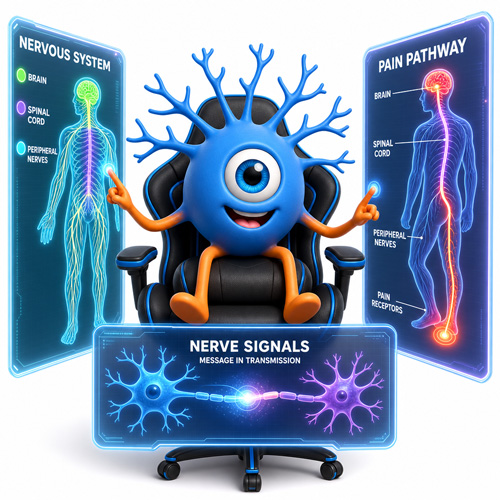
Pain is one of the many sensations in our nervous system. Messages travel between the body and the brain by travelling along nerves. Nerves connect everywhere in the body to the spinal cord, and from the spinal cord to the brain. The brain is our body’s command centre; it receives messages from the body and sends messages back out to create experiences (like pain and emotions) and actions (like movements of our arms and legs).
Some nerve endings are designed to detect ‘danger’. They are activated by force (e.g. pressure, stretch), chemicals or temperature. When activated, they send a message along the nerves to your brain that there might be danger. Your brain will then weigh up this message along with other information (e.g. what you see, how you are feeling emotionally, your memories of similar situations) and decide what to do. The ‘what to do’ might include experiencing pain to alert us to the potential danger or moving your body away from the potential danger.
Pain can help to protect our body from danger.
This TED Talk explains the science of pain and what is happening in our body when we experience!
What are the different types of pain?
Acute pain is short-term pain, like when you cut your finger, step on something sharp with bare feet, or break a bone. It is usually a result of an injury or illness. In this situation, pain serves as an alarm system to:
- Stop you doing whatever it is that caused the injury, and
- Protect the area to allow it to heal
The body heals itself very well. Acute pain usually goes away once the tissues are healed (usually a few days or weeks) and often doesn’t require much, if any, treatment.
Chronic pain is pain that stays for more than 3 months or keeps coming back (recurrent). It can be due to:
- An ongoing condition or disease (e.g., arthritis, endometriosis, migraines)
- Nerve damage (e.g., nerve or spinal cord injury)
- Sometimes, people experience pain even after an injury has healed. This isn’t because there is ongoing damage in the body tissues, but because the nervous system has become very sensitive.
Even if we can’t identify the cause of pain, the pain is just as real, and there are still ways to treat it.
What are injuries?
Injuries are common and occur when there is damage to the body’s tissues (e.g., skin, bone, muscle). Most injuries heal within a short time frame, e.g., days to weeks, but some injuries will take up to 3 months to heal. The body is very good at healing injuries. Some injuries may need to be assessed and managed by a health or medical professional (e.g., nurse, doctor, physiotherapist), whereas other injuries will get better without any help. Injuries may lead to acute pain.
How are pain and injuries related?
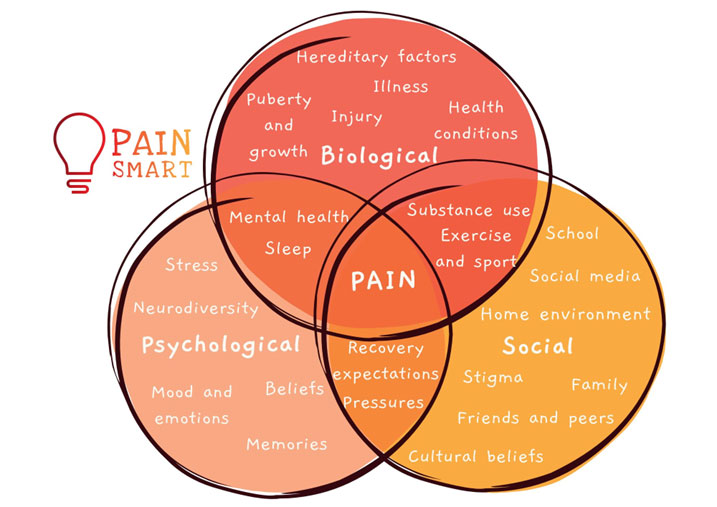
You may experience acute pain if you injure yourself. Remember that acute pain is like an alarm system- it helps alert you to danger. When you have an injury, pain lets you know there is tissue damage, and you should be careful to avoid any further damage. The intensity and duration of the pain may vary depending on bio-psycho-social factors (e.g., type of injury, the severity of the injury, your emotional state at the time, and environmental factors).
Remember Malik and Sophia from Pain Smart Lesson 2? Both Malik and Sophia sprained their ankles, but Malik’s injury had much more impact on his mood and activities compared to Sophia because of different bio-psych-social factors.
What influences pain?
We used to think pain was purely a physical (biological) experience. Now we know that biological (injury-related), psychological (thoughts and emotions) and social factors influence and are influenced by pain. This is known as the bio-psycho-social model of pain. Whatever the mix of bio-psycho-social factors, every person’s pain experience is real.
The bio-psycho-social model helps us understand the experience of pain and helps us understand how to manage it.
What can you do to manage pain?
There are many strategies that can be used to manage pain, including physical, psychological and social options. Read on for different things you can try to help manage your pain.
Young Pain Health has some great information about making sense of pain
The Resource Buddy has 4 parts
-
Strategies to manage pain
We have suggested six strategies that may help you better manage your pain.
-
Seeking help for pain
Sometimes it may be necessary to get further help from a health or medical professional to manage your pain